What’s Bugging You?
Lee’s bad day feels heavy, slow and tangled. With Betsy beside them, they find names for what they feel—and experiment with a few wonderfully buggy ways to move through it.
Look inside the book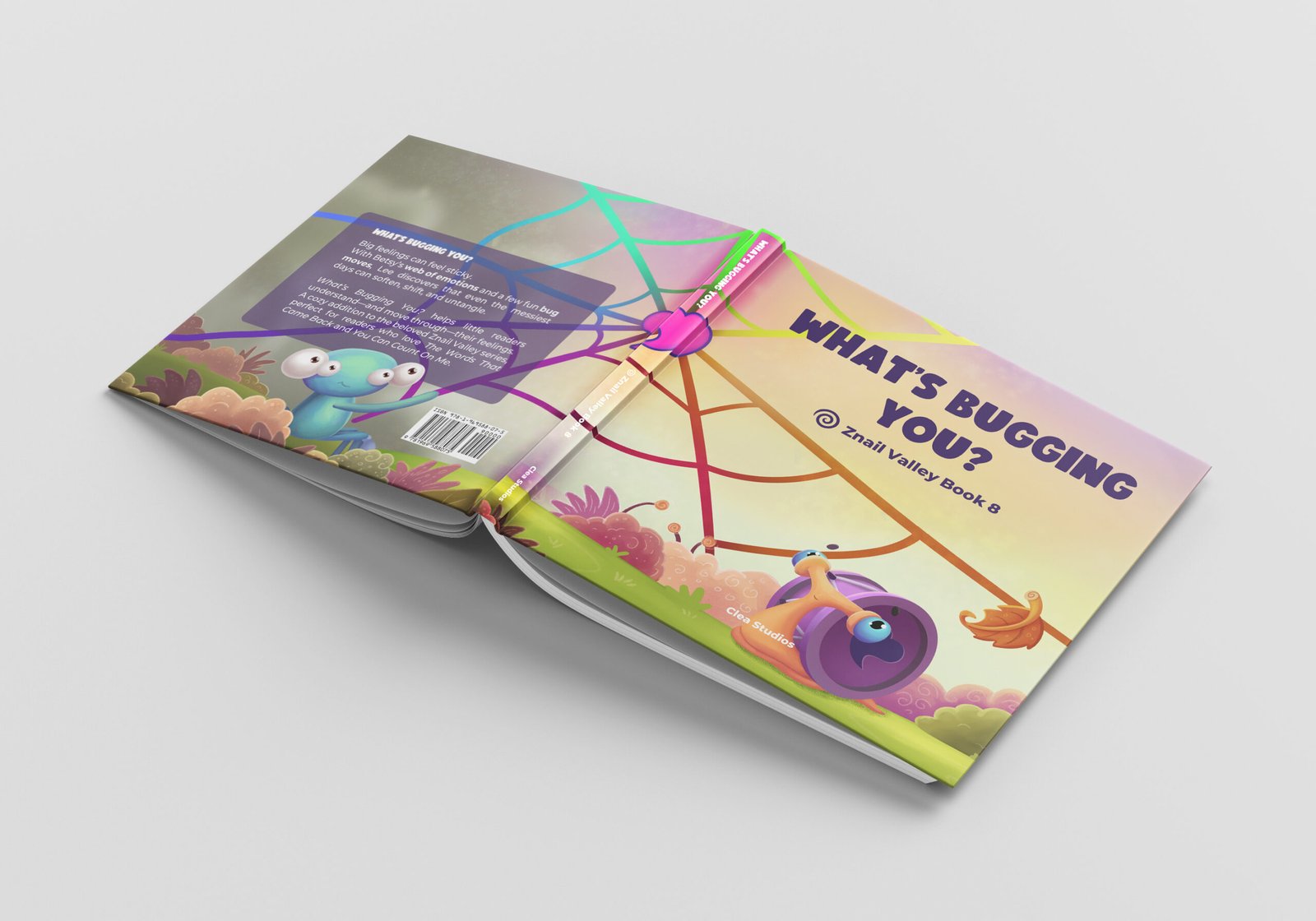
Preview What’s Bugging You?
A few selected pages from the story. The preview ends before Lee discovers what helps.
Selected preview pages · Znail Valley Book 8
A tangle is easier to explore together.
“Which ones are bugging you right now?”
—Betsy, inviting Lee to notice
A not-so-good day
Lee’s shell feels too heavy, their trail has washed away and their favorite leaf is gone. They curl into their shell and turn the hard day against themself: “No one else is this slow and messy.”
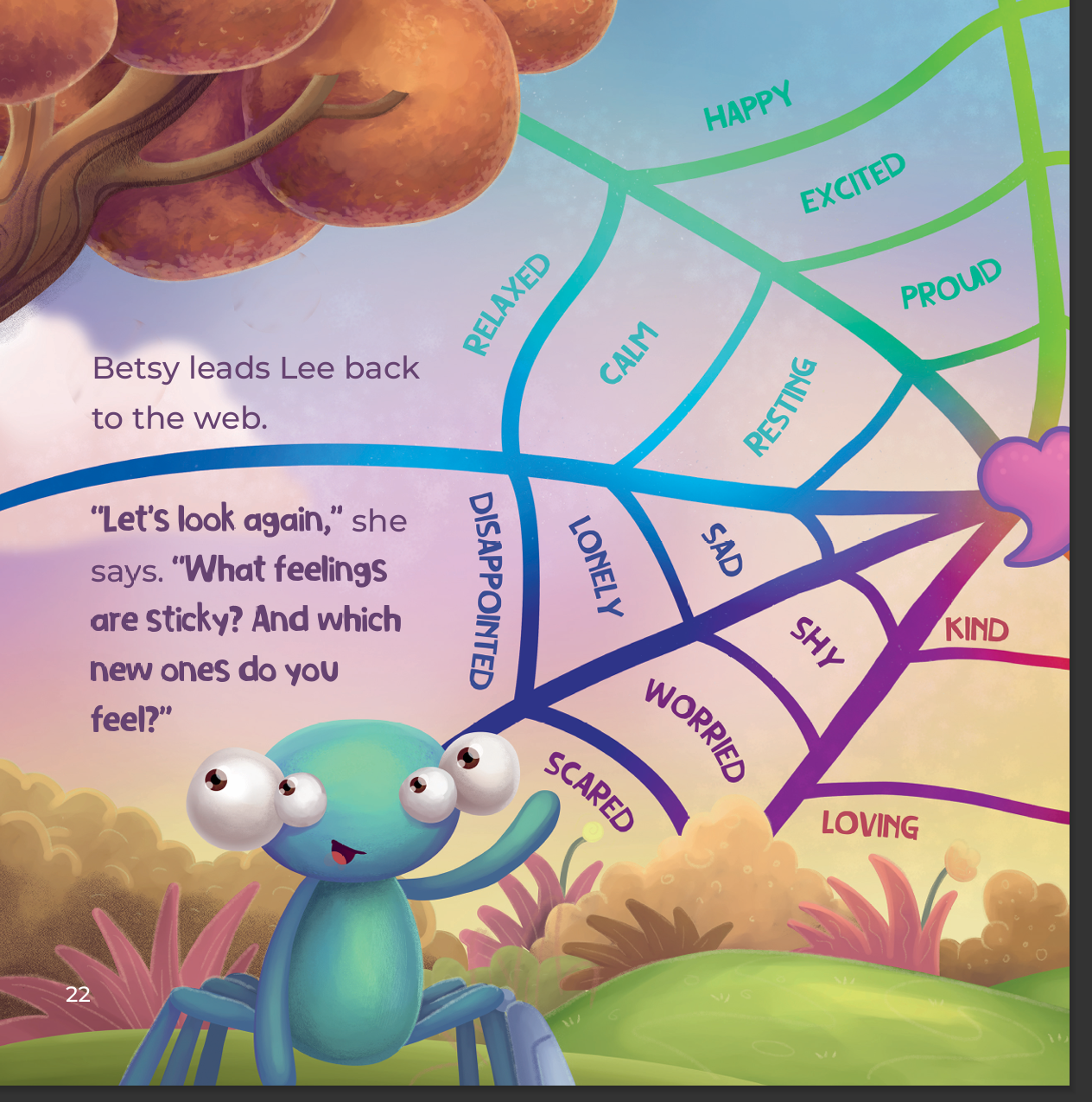
A web full of feeling words
Betsy doesn’t decide what Lee feels. She spins her web of emotions and asks. Lee considers their body clues, then identifies sadness and worry.
More than one experiment
Lee stretches, wiggles, buzzes and rests. Some moves help. One makes their tummy feel wobbly. Betsy accepts that information and offers another choice.
Look again
Back at the web, Lee notices that sad feels smaller and worried feels quieter. Calm and a little bravery have joined them. The feelings have changed; they did not have to disappear.
Pass it along
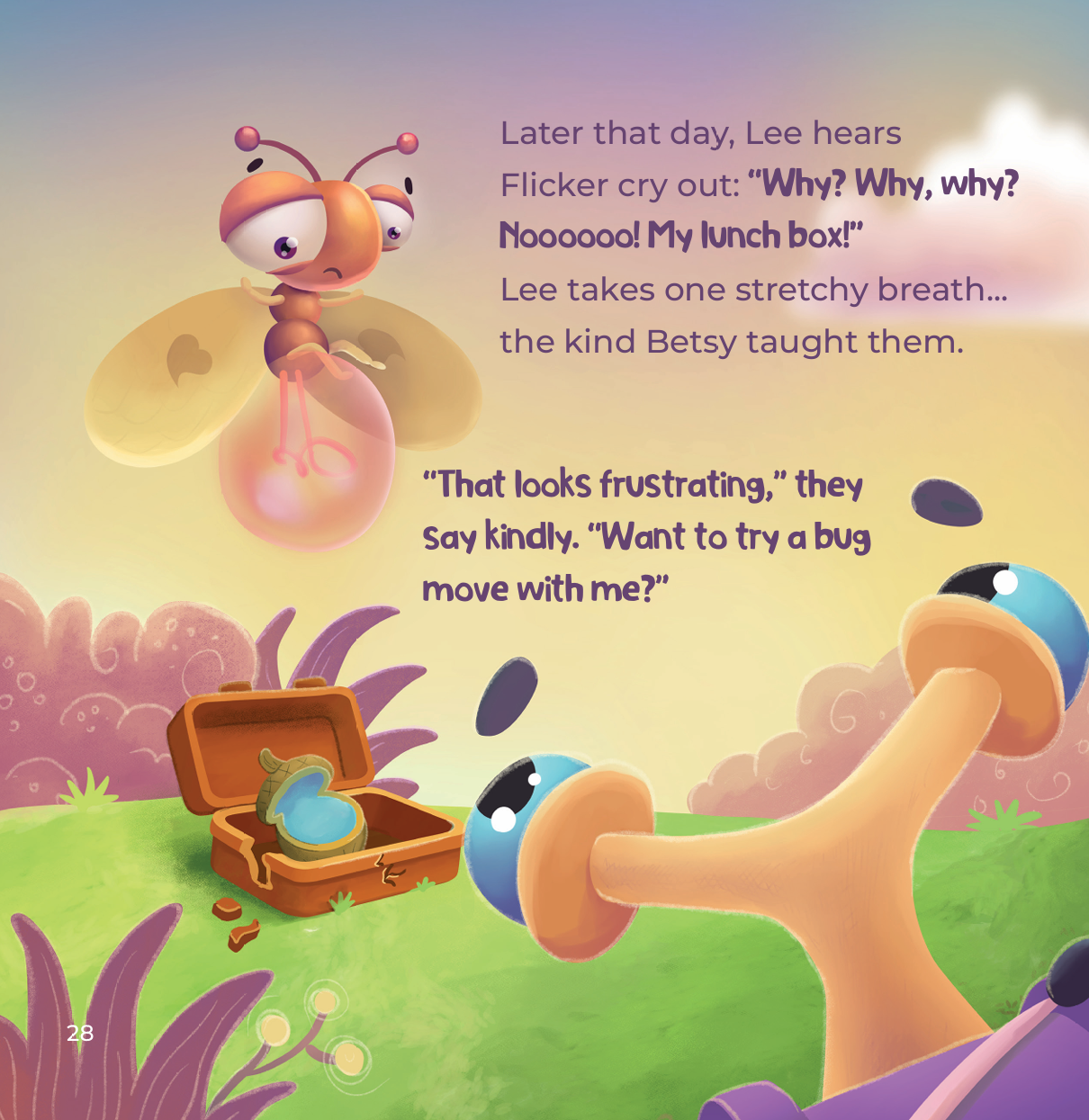
Later, Lee recognizes Flicker’s frustration. They offer a bug move—and then practical help repairing Flicker’s lunch box.
Four bug moves from the book
Betsy offers possibilities, not a single correct answer. Lee’s job is to try each movement and notice what their own body says.
Stretch like a spider
Reach far. Lee feels silly—and also a little better.
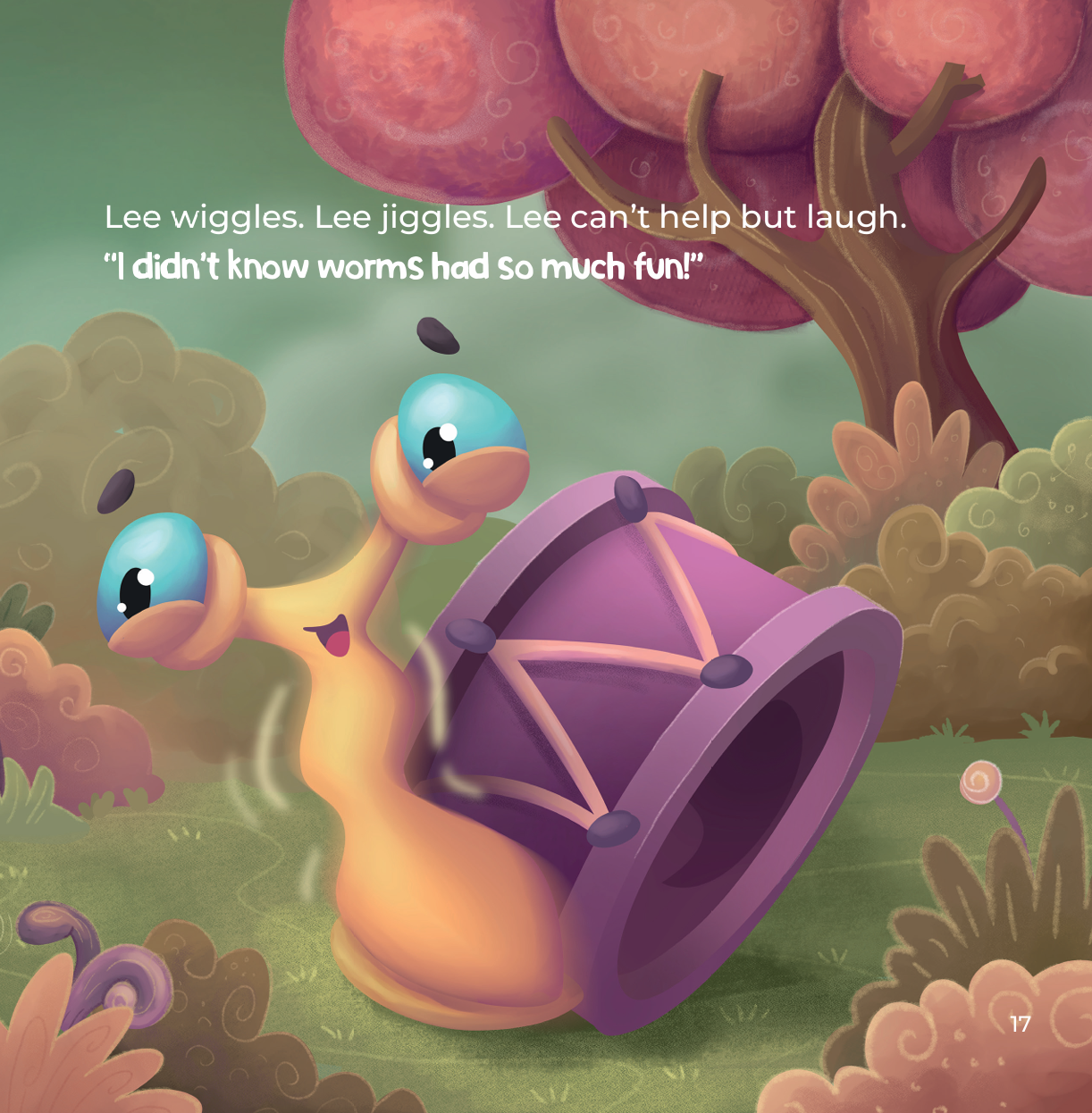
Try the worm wiggle
Wiggle and jiggle. The movement brings Lee laughter.
Buzz like a bee
Make the lips go brrrrr and feel the vibration. Lee notices this one makes their tummy wobbly.
Rest like a ladybug
Lie down, listen to the wind and feel the grass. This is the move that helps Lee settle.
The web makes room for change.
Lee returns to the same feeling words after moving and resting. The check-in is specific enough for them to see what shifted.
Nothing in the scene asks Lee to become cheerful on command. They compare before and after, recognize smaller changes and stand a little taller.
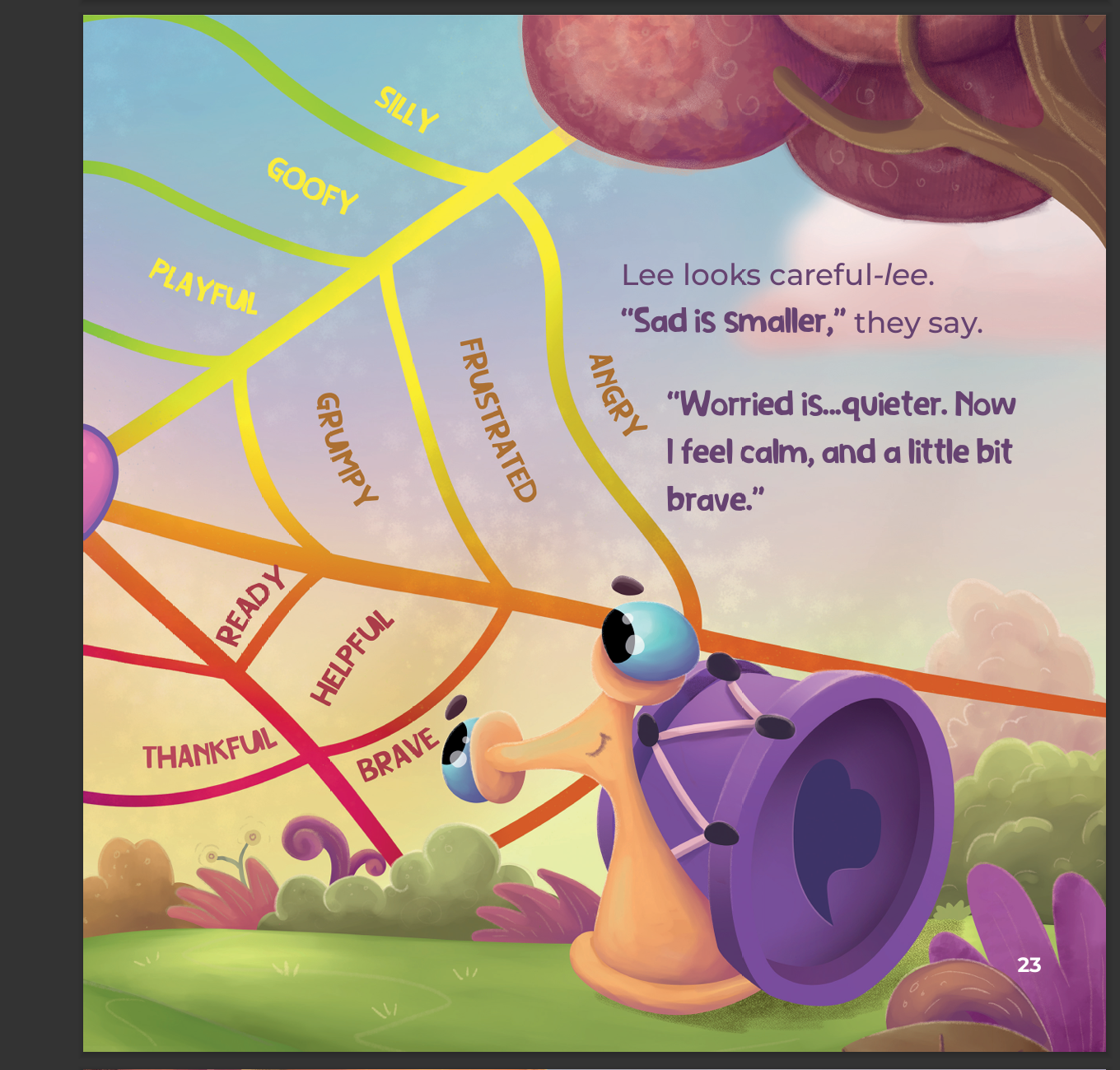
Heavy · sad · worried
Sad is smaller · worried is quieter · calm · a little brave
Lee makes the idea their own.
The final scene shows learning as something Lee can adapt—not a script they simply repeat. They notice Flicker’s frustration, offer a bug move, and suggest getting help with the broken box.
What the story gives children practice doing
The useful pattern is observable: notice body clues, name possible feelings, try an action, and check again.
Help name without guessing
Betsy offers a web of possibilities and asks Lee which feelings fit.
Treat the child’s response as information
When buzzing does not help, Lee says so. The next response is curiosity and another option.
Pair regulation with repair
Lee offers Flicker a movement and help repairing the broken lunch box.
Questions with room for real answers
Children can answer aloud, point to a feeling word, demonstrate a move or simply listen.
How can you tell which feeling is happening?
What helps you when you feel big feelings?
Which bug move would you want to try first?
What could you notice before and after you try it?
What’s Bugging You?
More from Znail Valley
Meet more stories built around the concrete things children notice, try and share with one another.