Observation, Perspective and Looking Closely
A playful read-aloud lesson that helps children separate what they can see from what they think it might mean, compare perspectives and revise a guess when new clues appear.
Look first. Guess second. Look again.
For a shorter storytime, use the before-reading prompt, two stopping points and one round of active practice in 20–25 minutes.
By the end of the lesson, children can:
- Name or indicate at least two observable details before making a guess.
- Explain the difference between a clue (“I see three points”) and an inference (“I think it may be a star”).
- Compare two ways people can notice or interpret the same thing.
- Revise a guess after receiving a new clue without treating the first guess as a failure.
- Use picture or story evidence to explain an idea.
Very little setup. Plenty to notice.
Choose an object or image with several visible attributes so children can collect clues without needing specialized background knowledge.
2 · Materials
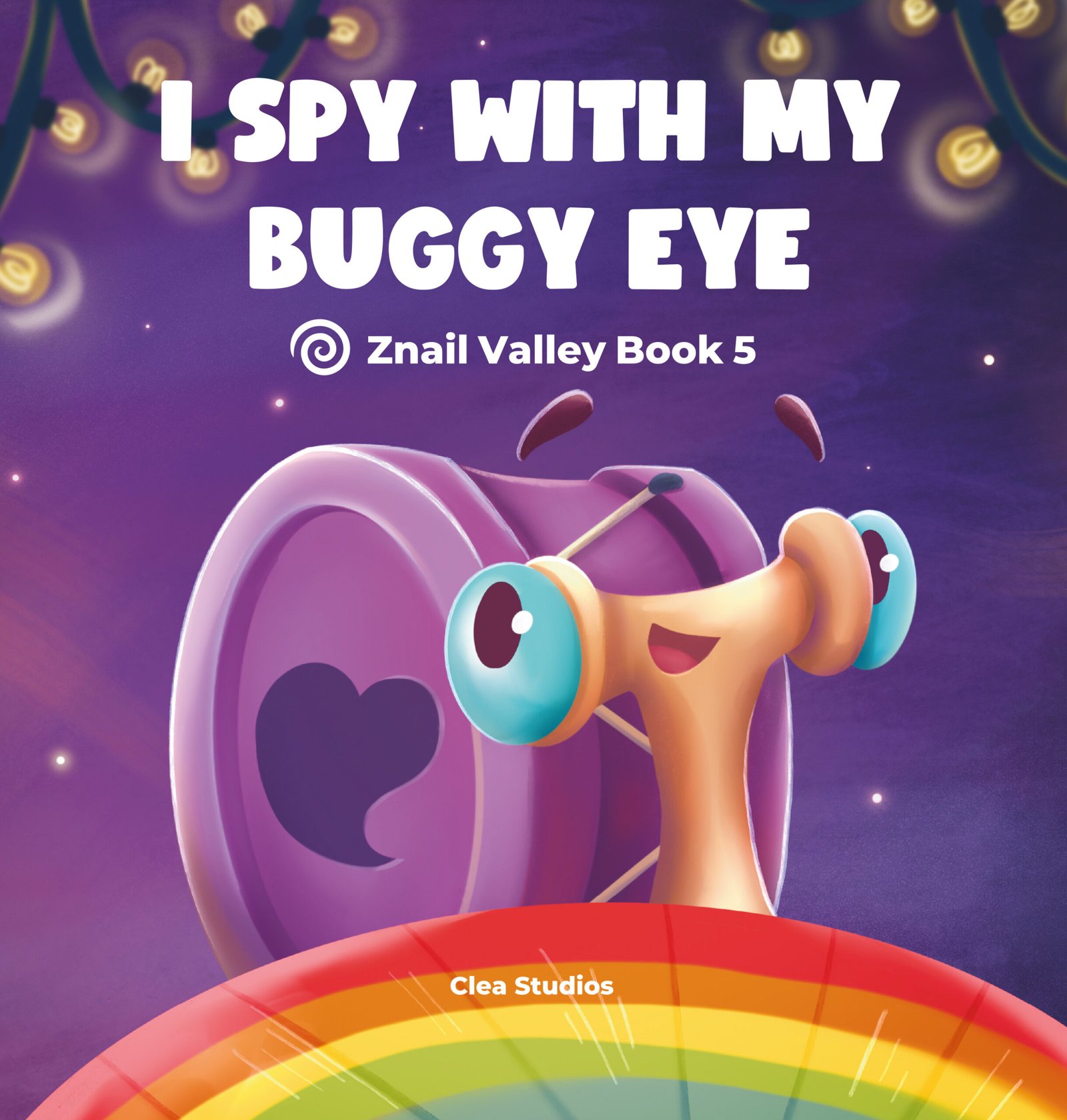
- I Spy With My Buggy Eye
- One familiar classroom object in a bag or behind a folder
- Chart paper or board
- Markers
- Optional: magnifiers, drawing paper and crayons
- Optional: two viewing frames cut from cardstock
3 · Before-reading prompt
Show part of the cover while briefly hiding another part. Ask:
“What do you notice? What does that clue make you think? What might become clearer if we could see more?”
Record children’s words in two columns: What we notice and What we think. Accept pointing, gestures and drawing as evidence-sharing.
Pause where the thinking changes.
Use three or four stops rather than interrupting every page. Page numbers may vary by edition, so each stop is anchored to a story moment.
When the friends choose I Spy
Ask: “Why might an observation game feel different from a quiz? What will the players need to do?”
After the first clue and guesses
Ask: “Which words are details we can observe? Which ideas are guesses? Can more than one guess fit the clue so far?”
When an unfamiliar word appears
Ask: “What can the friends do when one person uses a word another person does not know? How can a definition become another clue?”
When the friends look at the stars differently
Ask: “What does each friend notice or imagine? Do the different ideas cancel one another, or do they help the group see more?”
At the end of the game
Ask: “What changed because the friends kept looking and listening? When did someone revise an idea?”
Move from noticing to meaning.
Invite children to answer with words, gestures, a quick sketch or a partner share. Asking for evidence builds precision; it should not turn the conversation into a hunt for one adult-approved answer.
Useful facilitator language: “Great guess. What did you notice?”
Then follow with: “What new clue could help us?”
What is something a character could see, hear or point to—not just think?
Which guess used good evidence, even if it was not the final answer?
How did the friends help one another understand unfamiliar words?
When did looking from another place or listening to another person add information?
Can two people observe the same object and notice different true details?
What makes changing a guess a strong thinking move?
The Look-Again Lab
Children gather evidence, make a flexible guess and discover how perspective changes the available information.
A wrong guess can still be built from careful observation. Celebrate the clue and the willingness to update the idea.
- Hide most of a familiar object, leaving one small part visible.
- Invite children to state one observable clue without naming the object: color, line, shape, texture, size, position or part.
- Collect two or three possible guesses. Ask what clue supports each one.
- Reveal another part or let children move to a different viewing position.
- Ask: “What stayed the same? What new detail can you see? Would you keep or revise your guess?”
- Reveal the object. Compare the useful evidence across guesses.
- Repeat with a child choosing the object or drawing a close-up view for others.
Show the thinking—not just the answer.
Children may draw, dictate, point or write. One completed response is enough for a quick check of today’s objective.
Look for: at least one concrete detail, a related inference and evidence that the child understands a guess can change.
I noticed: ______________________________
That made me think: ______________________
Then I looked again and: __________________
My idea stayed the same / changed because: __________
Keep the thinking rich while changing the response demand.
Observation does not require fast speech, perfect vision or independent writing. Build more than one way to access clues and share an idea.
PreK and emerging communicators
- Offer two picture choices plus “something else.”
- Invite pointing, matching, acting or drawing.
- Model: “I see ____. I think ____.”
- Use one new clue at a time.
Grade 1–2 extension
- Require two details before an inference.
- Compare which clues are most useful and why.
- Write two explanations that fit the same evidence.
- Design a clue sequence from broad to precise.
Access and sensory supports
- Describe illustrations aloud and use real objects.
- Add touch, sound or position clues.
- Provide a quiet viewing space and extra processing time.
- Allow passing, partner response and preview of vocabulary.
- Avoid assessing visual acuity through the activity.
Send home one question, not homework.
Families can practice during a walk, while making dinner or from a window. No product needs to be returned.
Family message
Today we read I Spy With My Buggy Eye and practiced observation, perspective and flexible guessing. Children learned to name clues before deciding what those clues might mean.
Try a two-minute “look again” game at home. Choose an object and ask: “What do you notice?” Then change distance, angle or lighting and ask: “What changed when you looked again?”
A phrase your child may bring home is: “Great guess. What did you notice?” Talking, pointing, drawing and acting are all welcome ways to answer.
Connections grounded in what children actually do.
The lesson supports speaking, listening, picture-based evidence and careful decision-making through observable tasks.
- CCSS ELA · SL.K.1, SL.1.1, SL.2.1
- Children participate in collaborative conversations, listen to others and build on ideas while discussing clues and perspectives.
- CCSS ELA · SL.K.2, SL.1.2, SL.2.2
- Children ask and answer questions about information presented through the read-aloud, illustrations and peer explanations.
- CCSS ELA · RL.K.7, RL.1.7, RL.2.7
- Children use illustrations and story details to describe characters, events and how visual information contributes to understanding.
- Science and Engineering Practice
- Children make observations, compare information and use evidence to support or revise an explanation. This is a practice connection, not a claim of alignment to a specific NGSS performance expectation.
- CASEL · Responsible decision-making
- Children gather relevant information and consider new evidence before choosing or revising an interpretation.
- CASEL · Social awareness
- Children listen to perspectives that differ from their own and recognize that another person may notice a different, valid detail.
Standards connections are instructional supports for educator planning. Local scope, sequence and grade-level expectations should guide formal adoption.
I Spy With My Buggy Eye
At a Znail Valley sleepover, Lee, Lily, Betsy and Flicker play I Spy, make thoughtful guesses, explain unfamiliar words and discover that the same stars can hold science, stories and wonder.
Why this book fits: The game makes observation visible. Children hear clues, test possibilities, learn from one another’s vocabulary and see how a different perspective can add to—not erase—their own.
Observation lesson FAQ
What is the difference between an observation and an inference?
An observation names information available through the senses or a provided description: “The shape has three points.” An inference uses that information to form an idea: “It might be a star.”
Should the adult tell children when a guess is wrong?
Give another clue and invite children to reconsider. Name the useful evidence in the first guess, then model revision: “That clue fit your idea. This new detail gives us more information.”
Can two perspectives both be valid?
Yes. Two people can notice different true details or build different interpretations from incomplete information. Some questions eventually have one factual answer; others can support several evidence-based ideas.
How can this activity include a child with low vision?
Use real objects, tactile features, sound clues, spatial descriptions and partner observation. Let children decide which senses and response formats work for them.
How is learning assessed?
Listen for a concrete detail, a related inference and willingness to keep or revise an idea after a new clue. A spoken response, gesture, drawing or dictated sentence can all provide evidence.