A practical guide for ages 4–8
Understanding fear and the unknown
A strange shape, an unfamiliar sound or a dark corner can feel dangerous before a child knows what it is. The first goal is not to erase fear. It is to help the child feel safe enough to notice, wonder and choose one small next step.
Children handle the unknown more effectively when a trusted adult validates the fear, separates what is observed from what is imagined, and offers a manageable way to investigate.
Begin with safety
Fear is trying to protect the child.
When something is unclear, a child’s brain may fill the missing information with a danger story. Their body can react before they have words: freezing, hiding, running, crying, covering their eyes or calling for someone safe.
The feeling is real even when the guessed danger is not. A calm response keeps both truths together: you feel scared, and we can gather more information.
Courage is not the absence of fear.
For a young child, courage may be staying near a trusted adult, looking for one second, asking for more light, listening from farther away or deciding to return later. Choice matters. A child who has some control can use curiosity without being pushed past what they can manage.
Turn “What if?” into “What do we notice?”
Questions about color, shape, sound, movement, distance and light bring attention back to observable information. A small test can then update the child’s first interpretation. The aim is not to prove that everything unfamiliar is safe; it is to practice checking before deciding.
Stop · Notice · Test · Name
Four steps from alarm to information.
These steps can happen in a minute or across several attempts. Connection comes first; investigation begins when the child has enough calm and choice to participate.
Stop somewhere safe
Pause. Move closer to a trusted person, add light, increase distance or leave the space.
Notice what is real
Name only what can be seen, heard or felt: “It is long. It moves when you move.”
Try one small test
Change one thing—move a hand, turn on a light, listen again or watch together.
Name what changed
Compare the first guess with the new evidence. Understanding can grow while fear is still present.
Watching, waiting, asking for help or returning later are all valid next steps.
Language for the moment
Believe the feeling. Investigate the guess.
Short, concrete language works well when a child’s body is already on alert. These responses protect dignity and return some control.
“There’s something there!”
Try: “Something surprised you. Let’s look from where you feel safe.”
“It’s going to get me!”
Try: “That is the scary guess. What have we actually noticed so far?”
“Turn the light on!”
Try: “Yes. You can choose more light while we figure it out.”
“I know what it is, but I’m still scared.”
Try: “You can understand it and still want me nearby.”
A five-minute activity
Flicker’s Look-Closer Lab
Choose one safe, mildly mysterious thing: a shadow, a reflection, a distant sound or an object seen from an odd angle. The child may participate by speaking, pointing, drawing, moving or simply watching.
Materials: the mystery itself; paper and a flashlight are optional.
- Make a first guess. “What does your brain think it might be?”
- Collect three clues. Describe shape, sound, movement, distance or light.
- Change one thing. Add light, move closer or farther, make a sound, or change position.
- Compare. “What changed? What stayed the same?”
- Choose the ending. Investigate more, stop, ask for help, play with the discovery or return later.
Related picture book
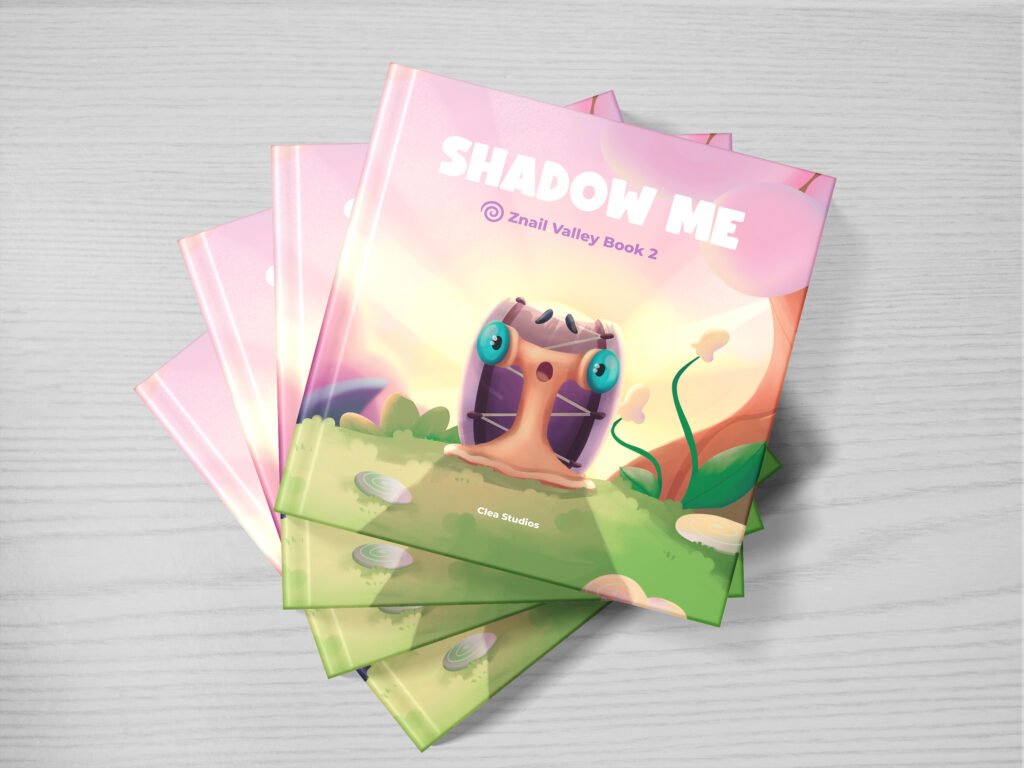
Shadow Me
Lee sees a dark shape that stretches, shrinks and follows every move. With Flicker’s light and support, Lee discovers that the frightening shape is their own shadow. Observation and play turn a fearful unknown into something Lee can understand.
Ask after reading
What did Lee know at first? What did Lee guess? What changed when Flicker added light? Which step helped Lee learn something new?
Best for: ages 4–8; family read-alouds; PreK–Grade 2 classrooms; counseling conversations; library storytime; early light-and-shadow science.
When more support may help
Consider professional guidance when fear is intense, persistent or expanding; regularly disrupts sleep, school, play or family routines; causes significant physical distress; or leads a child to avoid many ordinary situations. A pediatrician or qualified child mental-health professional can help assess what is happening and identify appropriate support.
Questions parents and educators ask
Fear, courage and curiosity
Should an adult explain immediately that there is nothing to fear?
Begin by acknowledging the child’s experience and helping them feel safe. An explanation is easier to use after the child feels believed and has regained some control.
Does investigating fear reward or reinforce it?
A brief, calm investigation can teach a repeatable process: notice the alarm, seek support, gather information and make a safe choice. The activity stays optional and proportionate to the situation.
What if the child does not want to look?
Watching from farther away, asking an adult to check, adding light, leaving or returning later can all be valid choices. Readiness cannot be forced.
How can teachers use this in PreK–Grade 2?
Use the four-step sequence with an unfamiliar classroom sound, mystery object or shadow experiment. Let children respond by speaking, pointing, drawing, moving or passing.
What social-emotional skills does this support?
The guide supports conversations about recognizing emotions, seeking help, distinguishing observations from interpretations, curiosity and responsible decision-making. These are alignment statements, not claims of independently validated outcomes.
How does Shadow Me connect to this guide?
In Shadow Me, Lee first finds safety with Flicker, then observes and tests the frightening shape. The story makes the process concrete without treating fear as a failure.
Sources and further reading
- Center on the Developing Child at Harvard University: Toxic Stress
- Center on the Developing Child at Harvard University: Guide to Resilience
- CASEL: What Is Social and Emotional Learning?
Educational information for parents, caregivers, teachers and librarians. It is not medical or mental-health advice.
The unknown gets smaller when a child does not face it alone.
Start with safety. Notice what is real. Test one small thing. Let curiosity arrive at its own speed.