Pebble Ball Pals
Lee wants to play pebble ball with the speedy Znails. But when the answer is no, Lee starts to wonder whether they have any friends at all. The clues may be closer than they think.
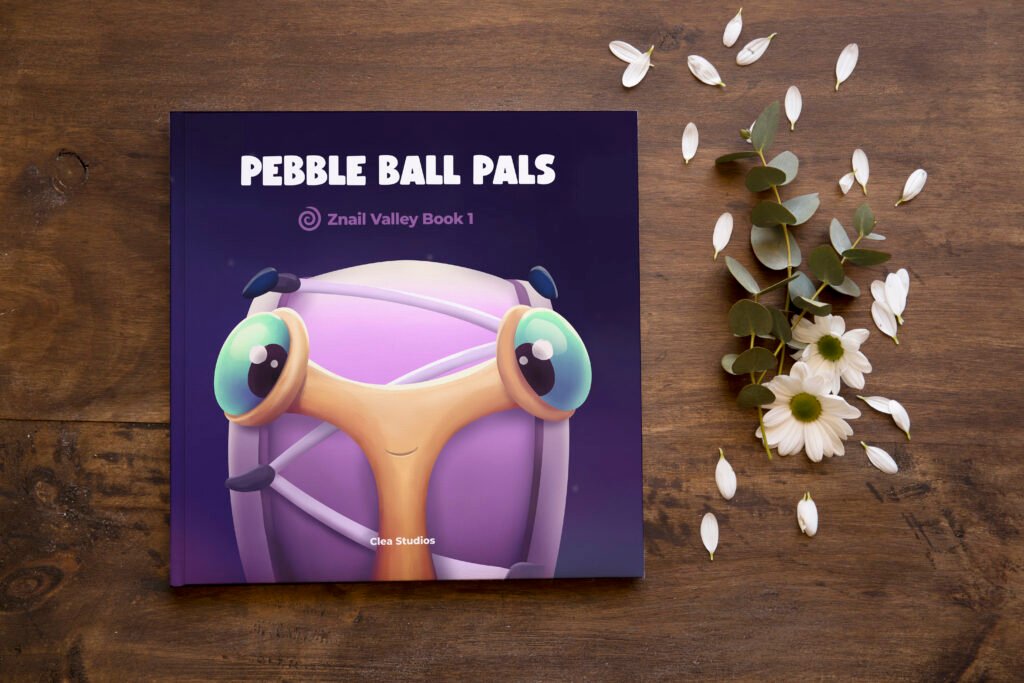
Pebble Ball Pals
Lee is looking for pebble ball pals. Here are a few pages from the beginning — enough to start the search, but not enough to find where it leads.


The story
Sometimes friendship is easier to see from one step back.
The Znails are fast. Lee is not. When the Znails leave Lee out of their game, the disappointment fills Lee’s whole view.
But Lily, Flicker, and Betsy keep appearing—helping, listening, inviting, and staying close. Pebble Ball Pals gives children a warm, funny way to notice that one rejection does not erase every relationship around them.
“Look in front of you.”
What children recognize
“If they said no, does that mean nobody likes me?”
For a young child, the loudest social moment can feel like the whole story. Lee’s adventure makes room for that hurt—and then widens the frame.
The resolution comes through observable evidence: who helps, who listens, who makes space, and who comes back. Friendship becomes something a child can notice, not a label an adult has to insist is true.
Friendship clues
What does a friend actually do?
There is no single friendship test. These story-sized clues help children notice care in more than one form.
They come back
A friend may get distracted or need space—and still return to reconnect.
They notice
They pay attention when something changes, even before the right words arrive.
They make room
They find a way for you to take part without requiring you to be exactly like them.
They help
They offer effort, an idea, or company when the moment gets difficult.
They can be different
Friends do not need the same speed, skills, body, interests, or way of joining in.
You can repair
A hard moment can matter without becoming the ending of every friendship.
Read-aloud prompts
Pause where the noticing happens.
Children can answer aloud, point to the page, act it out, draw, or simply keep listening.
What can make someone feel like they belong in a game?
What is Lee noticing? What might be hard for Lee to notice right now?
Which friendship clue did Lily, Flicker, or Betsy show?
For parents, teachers, and librarians
Use the story to widen the frame—not dismiss the hurt.
The most useful first response is to recognize the rejection. Then help the child gather specific evidence about the relationships around them.
Try saying
“That no really hurt. When you’re ready, should we look for clues about who has been showing you friendship?”
Make it concrete
Ask about actions: Who saved a place? Who checked in? Who shared an idea? Who was glad to see you?
Keep belonging broad
A child can be left out by one group and still be cared for. Multiple truths can exist in the same day.
Offer ways to respond
Children may talk, point, draw, act out a clue, choose “pass,” or return to the question later.
SEL connection: The book supports social awareness and relationship skills through perspective-taking, recognizing supportive actions, and discussing belonging. This is an alignment statement, not a claim of independently validated outcomes.
Book details
Pebble Ball Pals
| Series | Znail Valley, Book 1 |
|---|---|
| Written by | Aria de Clea |
| Publisher | Weeping Starlight Press |
| Length | 32 pages |
| Paperback ISBN | 978-1-969588-01-3 |
| Hardcover ISBN | 978-1-969588-03-7 |
| eBook ISBN | 978-1-969588-04-4 |
Questions grown-ups ask
About the book
What is Pebble Ball Pals about?
After the speedy Znails reject Lee from their pebble ball game, Lee wonders whether they have any friends. Lily, Flicker, and Betsy help Lee recognize friendship through the caring actions already happening around them.
What age is Pebble Ball Pals for?
It is designed as a picture-book read-aloud for ages 4–7 and works well in family, pre-K–2 classroom, counseling, and library storytime settings.
What social-emotional skills does the story support?
The story supports conversations about belonging, social awareness, perspective-taking, and recognizing the many ways friends show care. These are alignment statements rather than claims of independently validated outcomes.
Does the story say children should ignore exclusion?
No. Lee’s hurt matters. The story helps children hold two truths at once: being left out by one group can hurt, and other caring relationships may still be present.
Is Pebble Ball Pals the first Znail Valley book?
Yes. Pebble Ball Pals is Book 1 in the Znail Valley picture-book series.
The friends in front of us can be easy to miss.
Meet Lee, Lily, Flicker, and Betsy in the story that begins Znail Valley.